
Your Garage Door Springs Are Under More Stress Than You Think
Every time you open and close your garage door, the springs do the heavy lifting — literally. A standard residential garage door can weigh anywhere from 130 to 350 pounds, and the springs are responsible for counterbalancing all of that weight. Over time, the metal fatigues, and eventually, the springs will fail.
For homeowners in Crystal River, where humidity and salt air can accelerate wear on metal components, paying attention to your garage door springs is especially important. A broken spring doesn't just mean an inconvenience — it can mean a safety hazard, a door that won't open, or even damage to your opener.
The good news is that springs rarely break without warning. Here are the signs to watch for so you can schedule a replacement before you're stuck with a door that won't budge.
Understanding the Two Types of Garage Door Springs
Before diving into the warning signs, it helps to know what kind of springs your garage door uses:
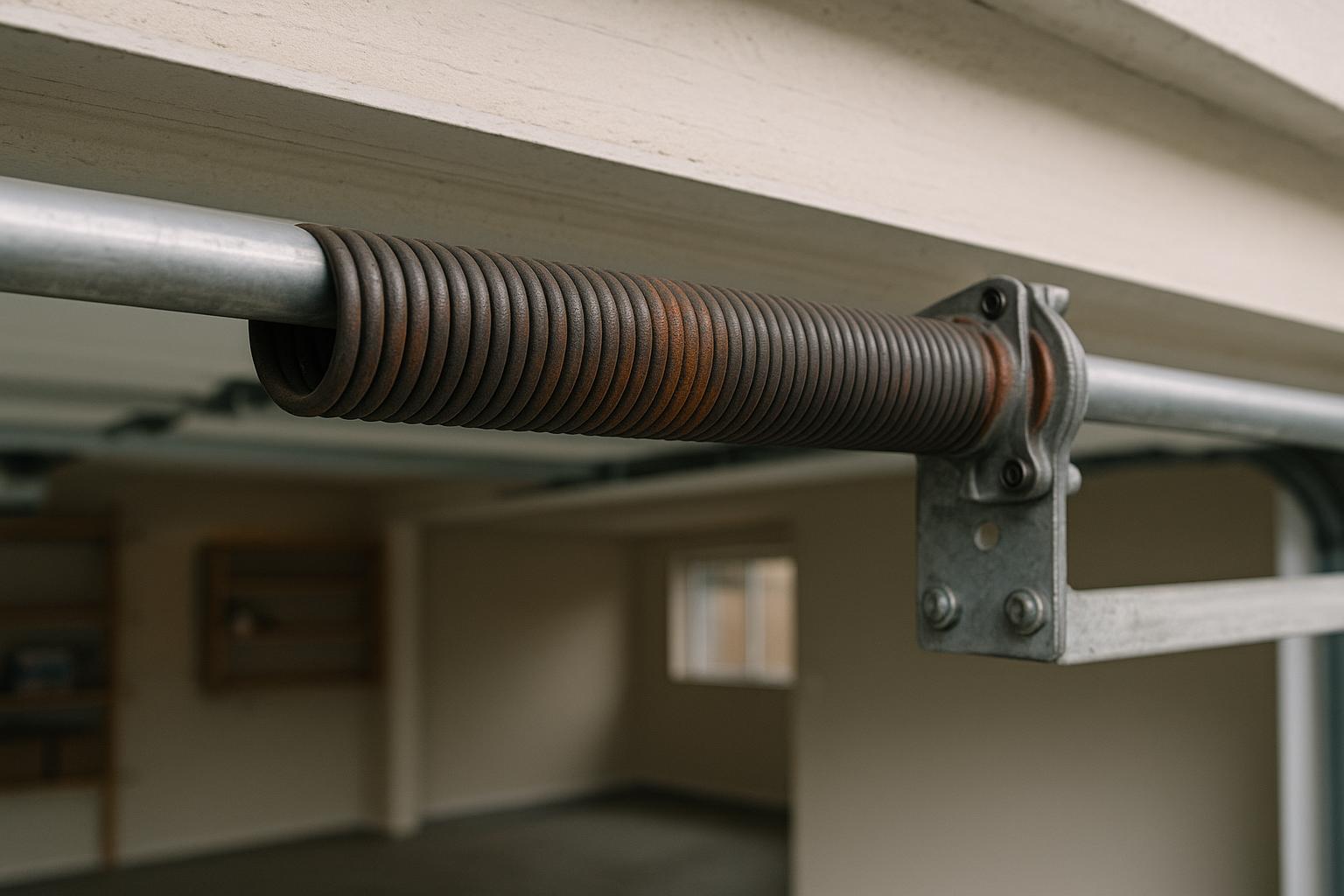
- Torsion springs are mounted on a metal shaft above the garage door opening. They twist and unwind to raise and lower the door. Most modern residential doors in Crystal River and the surrounding Citrus County area use torsion springs.
- Extension springs run along the horizontal tracks on either side of the door. They stretch and contract to provide lifting force. These are more common on older installations.
Both types have a limited lifespan, typically rated for around 10,000 cycles. One cycle equals one full open and one full close. If you use your garage door four times a day, that's roughly seven years of life. Use it more frequently, and the timeline shrinks.
Warning Sign #1: The Door Feels Heavier Than Usual
One of the earliest signs of spring fatigue is a door that feels noticeably heavier when you try to lift it manually. To test this safely, pull the emergency release cord (the red handle hanging from the opener rail) and try lifting the door by hand. A properly balanced door should lift smoothly and stay open about three to four feet off the ground without you holding it.
If the door is difficult to lift, slams back down when you let go, or feels like it's fighting you the whole way up, your springs are losing tension. This is a clear signal that replacement is needed soon.
Warning Sign #2: The Door Opens Unevenly or Crooked
If your garage door tilts to one side as it opens or closes, one of your springs may be weaker than the other. This is especially common with extension spring systems, where each side operates somewhat independently. A door that travels crooked puts extra stress on the tracks, rollers, and opener, which can lead to more expensive repairs down the road.
Warning Sign #3: You Hear Loud Squeaking or Popping Sounds
Garage doors are never completely silent, but there's a difference between normal operational noise and the sounds of a spring in distress. Listen for:
- Loud squeaking or grinding during operation, which can indicate the spring coils are rubbing against each other due to lost lubrication or deformation
- A sudden loud bang from the garage — this often means a spring has already broken. Many homeowners in Crystal River have told us they thought something fell off a shelf or someone broke into their garage, only to discover a snapped torsion spring
- Popping or clicking sounds that weren't there before, which can signal that the spring is beginning to separate or the coils are stretching unevenly
Warning Sign #4: Visible Wear on the Springs
Take a moment to visually inspect your springs. You don't need to touch them — in fact, you shouldn't, since they're under extreme tension — but you can look for these red flags:
- Rust on the coils, which is common in Florida's humid climate and weakens the metal over time
- Gaps between the coils on a torsion spring, which indicate the spring has stretched and is close to failure
- Elongation of extension springs, where the spring looks stretched out even when the door is closed
If you notice rust building up on your springs, regular lubrication with a silicone-based spray can help extend their life. But once you see gaps or significant corrosion, it's time to call a professional.
Warning Sign #5: Your Opener Is Struggling
Your garage door opener is designed to move a balanced door, not to do the heavy lifting on its own. When springs weaken, the opener has to work much harder. You might notice:
- The opener strains, moves slowly, or stops partway through the cycle
- The motor runs louder than it used to
- The opener shuts off before the door fully opens
Continuing to use a struggling opener with bad springs can burn out the motor, turning a spring replacement into a much more costly opener replacement as well.
Warning Sign #6: The Door Won't Stay Open
A garage door with healthy springs should stay in place when you open it manually and leave it at the halfway point. If the door slowly creeps down or crashes to the floor, the springs no longer have enough force to hold the door's weight. This is both a functional problem and a serious safety concern, especially if you have children or pets who might be near the door.
Why You Shouldn't Replace Garage Door Springs Yourself
We understand the DIY spirit — plenty of homeowners in Crystal River, Homosassa, and Inverness are handy and capable. But garage door spring replacement is one job that genuinely belongs to trained professionals. Here's why:
- Torsion springs are under extreme tension. A spring that snaps or unwinds uncontrollably during removal can cause severe injury or death.
- Proper tools are required. Spring replacement requires winding bars, vice grips, and specific knowledge of how many turns to apply based on the door's weight and spring specifications.
- Incorrect installation causes more problems. An improperly wound spring can damage your door, your opener, or fail again prematurely.
Professional replacement typically takes under an hour and ensures the job is done safely and correctly.
How Long Do Replacement Springs Last?
Standard garage door springs are rated for approximately 10,000 cycles. However, high-cycle springs rated for 25,000 or even 50,000 cycles are available and can be a smart investment if you use your garage door frequently. When we replace springs for customers throughout Citrus County, we always discuss the options so you can choose what makes the most sense for your household's usage and budget.
Don't Wait for the Snap
A broken garage door spring always seems to happen at the worst possible time — when you're running late for work, loading up for a weekend trip, or during a storm. By recognizing the warning signs early, you can schedule a replacement on your terms instead of dealing with an emergency.
If you've noticed any of these signs with your garage door in Crystal River or the surrounding areas, give us a call at Crystal River Garage Door Repair. We'll inspect your springs, give you an honest assessment, and get your door operating safely again. No surprises, no upsells — just straightforward service from a team that knows garage doors inside and out.