
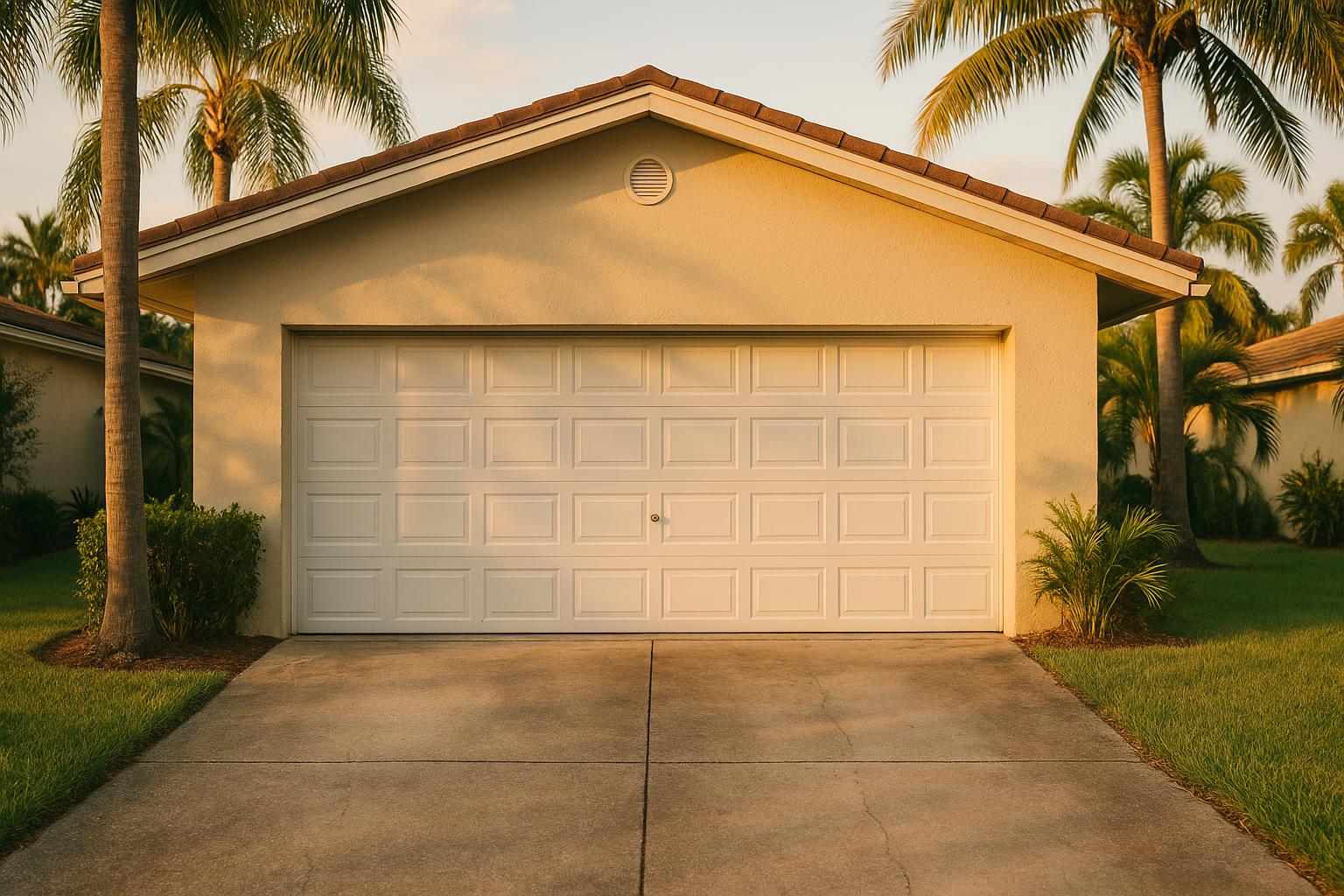
You're Running Late and Your Garage Door Won't Budge
It's early morning in Crystal River. You've got your coffee, your keys, and a schedule to keep. You press the garage door opener button and — nothing. Or maybe it groans, moves an inch, and stops. Few things are more frustrating than a garage door that decides not to cooperate right when you need to leave the house.
This is one of the most common calls we get at Crystal River Garage Door Repair, and the good news is that the cause is usually something identifiable and fixable. Before you panic or try to force the door open, let's walk through the most likely reasons your garage door won't open and what you can do about each one.
1. Dead Batteries in the Remote
It sounds almost too simple, but dead remote batteries are one of the top reasons people think their garage door is broken. Before you assume the worst, try pressing the wall-mounted control panel inside the garage. If the door opens from the wall switch but not the remote, swap out the batteries in your remote and see if that solves the problem.
If you have a keypad mounted outside, test that as well. Sometimes remotes fail gradually — working intermittently before dying completely — so it's easy to mistake a battery issue for a mechanical failure.
2. The Photo Eye Sensors Are Blocked or Misaligned
Every modern garage door has two small photo eye sensors near the bottom of the door tracks, one on each side. These sensors send an invisible beam across the opening, and if anything interrupts that beam, the door won't close — and in some cases, it won't open properly either.
Here's what to check:
- Obstructions: Look for leaves, dirt, cobwebs, or small objects blocking the sensors. In Crystal River, it's not uncommon for lizards, palmetto bugs, or debris from nearby trees to interfere with the sensors.
- Alignment: Each sensor has a small LED light. If one is blinking instead of glowing steadily, the sensors are likely misaligned. Gently adjust the sensor until the light holds steady.
- Dirty lenses: Wipe the sensor lenses with a soft cloth. Morning dew and humidity — something we deal with constantly here in Citrus County — can fog up the lenses enough to cause issues.
3. The Door Is Locked and You Don't Realize It
Many garage doors have a manual lock mechanism — a horizontal bar that slides into the track on one or both sides. If someone accidentally engaged this lock, the opener motor will strain against it without being able to move the door. You'll usually hear the motor running but the door staying put.
Check the lock handle on the inside of the door. If it's been turned to the locked position, simply unlock it and try the opener again. Running the opener repeatedly against a locked door can burn out the motor, so address this quickly if you suspect it's the issue.
4. A Broken Torsion or Extension Spring
If you heard a loud bang from the garage — possibly the night before or even days ago — there's a strong chance one of your springs broke. Garage door springs carry the weight of the door, and without them, the opener motor doesn't have the mechanical advantage it needs to lift the door.
Signs of a broken spring include:
- A visible gap in the torsion spring above the door
- The door feels extremely heavy when you try to lift it manually
- The opener motor runs but the door barely moves or doesn't move at all
- Cables hanging loose near the bottom of the door
Do not attempt to replace garage door springs yourself. These springs are under extreme tension and can cause serious injury if handled improperly. This is a job for a trained technician with the right tools and experience.
5. The Opener Motor Has Failed
Garage door openers typically last 10 to 15 years, depending on usage and maintenance. If your opener is getting up there in age, the motor may have simply reached the end of its life. Signs of a failing opener motor include:
- A humming sound with no movement
- The opener light turns on but the motor doesn't engage
- Intermittent operation that's been getting worse over time
- A burning smell coming from the motor unit
If the motor has failed, you'll need a professional to assess whether a repair is possible or if a full opener replacement makes more sense. In many cases, upgrading to a newer model gives you better performance, quieter operation, and modern features like smartphone connectivity.
6. The Disconnect Switch Was Engaged
Every garage door opener has an emergency disconnect — usually a red cord or handle hanging from the track rail. This disconnect allows you to operate the door manually during a power outage. If someone pulled this cord (maybe during a recent storm — we get our share in Crystal River), the opener is disengaged from the door.
To re-engage it, pull the cord back toward the opener or simply press the opener button while manually guiding the door. The trolley should reconnect with the carriage as the motor runs. Consult your opener's manual if you're unsure how your specific model reconnects.
7. Power Issues
Check whether the opener unit is receiving power. Look for the ceiling-mounted light on the opener — if it's not on, the unit might be unplugged, the outlet may have tripped, or a breaker may have flipped. Check your electrical panel for any tripped breakers, and make sure the outlet the opener is plugged into is working by testing it with another device.
Power surges during Florida thunderstorms can trip breakers or even damage opener circuit boards, so this is worth investigating if you've had recent storms roll through the area.
When to Call a Professional
Some of the issues above — dead batteries, dirty sensors, a tripped breaker — are easy fixes you can handle yourself. But if you're dealing with broken springs, a failed motor, damaged tracks, or anything that involves the door's mechanical components under tension, it's time to call in a professional.
At Crystal River Garage Door Repair, we handle these calls every day across Crystal River, Homosassa, Inverness, Lecanto, Beverly Hills, and Citrus Springs. We know how important it is to get your garage door working again quickly, which is why we offer prompt service and emergency repairs when you need them most.
A Few Tips to Prevent Morning Surprises
You can reduce the chances of waking up to a non-functional garage door by staying on top of basic maintenance:
- Test your door monthly — open and close it a few times and listen for unusual sounds.
- Inspect the springs and cables visually for signs of wear, rust, or fraying.
- Keep the sensors clean and clear of debris.
- Replace remote batteries annually as a preventive measure.
- Schedule a professional tune-up once a year to catch small problems before they become big ones.
A little attention goes a long way toward keeping your garage door reliable — especially when you're counting on it at 7 a.m. on a Monday.
If your garage door isn't cooperating and you can't figure out why, give us a call. Crystal River Garage Door Repair is here to help you get back on track — literally.